Quotes

"While we are reading, we are all Don Quixote." ~ Mason Cooley
Showing posts with label book clubs. Show all posts

Tuesday, September 29, 2015

In Search of Good Writing

"Good writing is clear thinking made visible."
~ Anonymous

Over the years, I've been enamored with writers who create believable characters, or those who use unusual descriptive behavior, or who develop intriguing plot lines, reading mainly fiction or occasionally non-fiction that could be helpful to my business (or an immediate personal crisis).

These past few years, with the time that retirement affords and the support of participation in a book club with members of diverse interests, I've become a much more eclectic reader who is learning to appreciate, above all, quality writing.  Writing that helps me clarify my own thinking, or writing so crisp as to expand or challenge the way I currently think.  

Now, I'm reading essays, short stories, memoirs, historical narrative, science, and, what may surprise some of my friends, searching the net for commentaries, book reviews, etc.  

This month, I'd like to recommend two diverse examples of good reading I've been fortunate to discover.

The first is a book of essays by poet and essayist, (and funeral director!) Thomas Lynch, BODIES IN MOTION AND AT REST.   As reviewed in the New York Times in 2000, "The essays in ''Bodies in Motion and at Rest'' are a thought-provoking, engaging hybrid of memoir, meditation and comic monologue.  Whether writing about his Roman Catholic boyhood, fatherhood, the family legacy of alcoholism, the funeral trade or the integral relationship in his life between the ''mortuary and literary arts,'' Lynch approaches his subjects with a beautifully executed balance of irreverence with reverence, gallows humor with emotional delicacy and no-nonsense immanence with lyrical transcendence."

I parceled out the essays, as I do a box of Godiva chocolates, savoring each, wanting the pleasure to last as long as possible.  This is a book I will read again.


The second example is brainpickings, a site originally recommended by one of the aforementioned book club members.  Its weekly newsletter,  accessed at https://www.brainpickings.org, introduces the reader to a variety of topics containing references and links to related books and articles.  It is consistently well-written and beautifully illustrated.   Be warned, you will be reading all week if, like me, you can't resist clicking on the additional links.  Check it out.

Friday, March 7, 2014

And the Mountains Echoed by Khaled Hosseini

It's been some time since I've posted, not because I haven't been reading - I have. Mysteries and e-books about minimalism and habit formation.  And I've started a couple that I haven't finished.  (One of the resolutions I made a few years ago was to abandon any book that didn't engage me within 50 pages, no matter how great the critical reviews.)  In short, haven't posted because I haven't had much to say.

Then, I read our book club's February selection, And the Mountains Echoed, the third novel by Khaled Hosseini,  author of  The Kite Runner.  Not having read that, and truthfully, not inspired to, I only read this selection out of commitment to the book club and my past experiences of pleasant surprise when I did.  Once again, I've been thankful that I followed through.

And the Mountains Echoed is a treasure, a complex and compassionate story woven by a master storyteller, one of my favorite pieces of fiction from the past few years.  It has a tapestry of themes - loyalty, family, filial love, survival, interconnection, acceptance...woven through the lives of a series of fully fleshed individuals across continents and generations.  (Reminded me a bit of a classic Russian novel where it helped to keep an accounting of the various characters and how they relate to one another, or as I did when a student, to give them nicknames.)

I recommend you check out a variety of reviews of this book.  You will see a wide divergence of opinions and several synopsis of the story line.  For my part, this is what I most enjoyed -

  • the lyrical beauty of Hosseini's writing
  • the humanity of his characters
  • and the intricate relationships between them,
  • his sensitive rendering of cultural differences
  • his ability to deliver historical, cultural information without preachi
  • the intricate, multi-leveled story
And - I'm starting The Kite Runner tonight.


Tuesday, December 10, 2013

Still Life by Louise Penny

With so many unread books waiting throughout our home and more on my Kindle, I am reluctant to reread even my favorite books.  But my agreement with my siblings for our family book club is that we will read whatever one of us recommends, even if we have already read it.  

When it was my brother Jim's turn to select a book, I was not surprised that he chose Still Life, Louise Penny's introduction to her popular award winning mystery series and a book I had already read. Penny is a favorite author of both of us.  I was a bit concerned that our sister Mary would enjoy it, however, as she rarely reads mystery...not uncommon, though to an avid mystery reader like myself, a concern whenever I recommend one.

My concern was short lived, however, as she enjoyed this charming, literate and ingenious tale as much as Jim and I have.  What did surprise me, pleasantly to be sure, was how much more I enjoyed and appreciated this book the second time around.  Penny's plots are tight and intelligent.  The central murder to be solved in this novel is who killed a beloved elderly woman with an arrow and why.  In itself, not especially intriguing, but Penny develops her plots with care and thought.  No inane red herrings.  No gratuitous sex or violence.  

What makes Perry's novels special, from my viewpoint, are the wonderful, multi-dimensional characters she creates.  And having read the series to date, what struck me this time was how beautifully she foreshadows the strengths and flaws of these characters, strengths and flaws that emerge naturally as the series progresses, as naturally as they do in real life.  Whether it is Chief Inspector Armand Gamache of the Montreal Surete, one of my favorite fictional detectives, or any of the unique supporting cast of characters, they never become caricatures.  Never become predictable.  Never black or white. These are characters who evoke the gamut of emotions from fondness, empathy and concern to frustration, and downright dislike. Characters as interesting, if not more so, as those in most novels on fiction shelves.  Given Penny's writing skills, even the small Canadian town of Three Pines (whose murder rate must be outrageous) acquires such a rich personality that I consider it a character in its own right.

If you are a veteran mystery fan but don't know this series, by all means give it a try.  If you have resisted mystery, thinking it formulaic, predictable, give Still Life a shot.  And, please, let me know what you think.


Thursday, November 14, 2013

Leonardo and the Last Supper by Ross King

Were it not our book club selection, I doubt I would have chosen this book and had I not agreed to lead the discussion, I most likely would not have finished it.  Leonardo and the Last Supper is a dense, sometimes laborious read.  Filled with historical, political and cultural information to provide a context for Leonardo's famous painting, this book is not for the reader who reads chiefly for entertainment.  It reads like a series of an art historian's lectures rather than historical narrative (such as the work of Candace Millard, a much easier read).

But if you read to learn, or also read to learn, this book is  worth every one of the 275 small print pages.  King provides a rich tapestry of data about the players - the European monarchs and popes and artists,  and the times - the High Renaissance in Italy - that generated the iconic mural that continues to fascinate after more than 500 years.    He details the reasons the Last Supper took so long to complete and why it is sadly deteriorating.  And he creates a deeper understanding of the charismatic and brilliant genius who would have preferred a career, and fame, as an architect and military engineer. 

 We had a lively book club discussion, as the variety and depth of information allowed for everyone to contribute from a different angle.  Be forewarned that if you prefer to use a reading guide, I couldn't  find one.  Didn't create a problem, however.  All I had to do was ask "What did you learn?" and "What most fascinated you about the book?" and we were off and running.

 At the conclusion of our discussion, I asked, "Would you recommend this book?" and to a person, the response was, "It depends."  I, we'd, recommend this to anyone fascinated by  the period, the artist, the work and/or the controversy around it.  (A caveat - King loves the detail, the names, the dates, the obscure vignettes.  There are pages of footnotes, in themselves an interesting read.) In the final analysis, I can't recall a book I've learned so much from in many years.  If that tweaks your interest, at least check out Leonardo and the Last Supper.


Wednesday, August 28, 2013

The End of Your Life Book Club by Will Schwalbe

I'm back - haven't blogged, simply because....I haven't.  Have been reading though.   With the heat in Utah, and the hiatus of many activities I otherwise engage in, I've been on a reading marathon these past three months.  Such luxury!

In fact, have read a couple books a week, several short stories, magazines, blogs.  Fiction and non-fiction. Some memorable and some I gave up on after only a few pages.  The best, the highlight of my summer, the work that most engaged me, that most moved me was The End of Your Life Book Club by Will Schwalbe.

My synopsis will be brief - (this book is more than adequately introduced, outlined and reviewed elsewhere).  It is the recounting of the author's last months with his mother as they coped with her treatment for pancreatic cancer and eventual death.  It is a tribute to an incredible woman, their relationship, the informal book club of two that they created, the books they read and discussed and the insights Schwalbe got in the process.

What I want to share here is why this book has touched me so - why, though I read it on my Kindle, I bought a copy to place on the shelf that holds the dozen or so books that have impacted me most over my lifetime.  In no order of importance -
  • "Mom" was a phenomenal woman.  Intelligent, courageous, compassionate, committed - she was the founding director of the Women's Commission for Refugee Women and Children, only one of several accomplishments in her life, including the raising of three children.  The kind of woman I would have loved to spend an afternoon with.  Getting to know her through the eyes of a loving son, through her responses to the various books, to get a glimpse of the woman, not just her accomplishments - I particularly enjoyed this aspect of the book.
  • Will - well suffice it to say that had I had a son, I would hope he would write, speak of me, remember me with the obvious love and respect that he conveys throughout this book.  It is, indeed, a tribute.
  • Being an avid reader, I was enthralled by the literary discursions.  Some of their choices I had already read - The Elegance of the Hedgehog, Olive Kitteridge, Crossing to Safety among others.  And admittedly, I was more than just a bit pleased that I often shared their reactions. Their opinions regarding other books, sometimes very divergent, intrigued me enough that I have already downloaded a couple.  Others, I'll skip, thank you!
  • I found the style and the tone of the book to be very accessible.  Having had cancer myself, and caring for my husband during his bout with cancer, I was grateful for the honest, yet circumspect way in which Schwalbe relates both treatment and death - never maudlin, never gratuitous.  Not that I didn't cry - well, truthfully wept.  But I also laughed, out loud belly laughs. 
A final note - after I wiped away the last tear, I called my brother in Wisconsin, the most well-read individual I know, who constantly is calling me to read something he has just completed.  I asked him to read this and tell me what he thought of it.  Which he did - and called me within a couple days to say he loved it, so much so that he had just bought a copy to bring to a high school buddy who had recently lost his mother.  I plunged in, asking if he would consider creating our own book club (no, neither of us is dying, but we are close, value each other's opinions,  and getting on in years).  And held my breath wondering if he would consider my request an obligation.  Not only did he readily agreed, but so has our sister.

To be drawn to think, to feel, to relate, and to take action - doesn't get much better than that for me!


Sunday, May 19, 2013

Cadillac Desert by Marc Reisner

I am embarrassed to say I have just read this amazing book..  My husband read it 25 years ago and has continued over the years to sing its praises and to encourage me to read it.  But daunted by its length and thinking I would need an engineering degree to understand it, I kept deflecting his recommendation.  Strange, then, that I should suggest it as a selection for our book club, and stranger yet that I would offer to lead its discussion.  Admittedly, while reading the first chapter I questioned my sanity for doing so.  Within 50 pages or so, however, I was hooked - by the content and by the quality of writing.

Cadillac Desert is the riveting tale of "the American West and Its Disappearing Water." It is also a tale of greed, fraud, duplicity, arrogance, hypocrisy, cronyism, graft, blind ambition, and plunder...to list some of the words that thundered in my mind as I poured through Reisner's expose. It is the story of "rivers diverted and dammed, of political corruption and intrigue, of billion-dollar battles over water rights and ecologic and economic disaster." A course in history and political science.   It is well-documented, compelling, perceptive and even occasionally witty. 

Halfway through the book I found myself doing additional research and came upon a series of videos on the Internet produced before Reisner's death in 2000, capturing interviews with him and with a villain of this saga,  Floyd Dominey, the Commissioner of the Bureau of Reclamation for 10 years.  I downloaded Beyond the Hundredth Meridian by Wallace Stegner, a book Reisner cited and respected. I found myself learning more than I had from any other book I've read in the past 10 years.  I decided that whether anyone else in the book club applauded this selection, I thought it was one of the best and most important selections chosen in the two years I have participated. 

As it turned out, I need not be concerned.  Everyone in our group of 15 found Cadillac Desert valuable, intriguing, an important contribution, a powerful learning experience.  And agreed that he or she would recommend it to anyone who is concerned about the issue of water or the future of the western states in particular.  I'm only sorry I didn't read it sooner.


Tuesday, October 23, 2012

For Your Consideration

Having been on vacation in NY - 11 hours each way to get there - and then recovering from the ordeals of travel, I've caught up on some reading these past few weeks.  It's been a curious assortment of books, if I do say so.  But illustrative of my eclectic reading tastes.  Hopefully, something will catch your fancy.  For your consideration:

A Taste of Murder by P.D. James.  With all the unread books I have on my shelves and on my Kindle, it could be argued that I shouldn't spend time rereading a novel.  But I'm glad I decided, on a whim, to revisit this 1986 gem of a mystery by a master of the genre.  James is well-respected for her elegant, intricate plots written as only the best British mystery writers seem capable of, but this go-round I became enthralled as well with her descriptions of place and character.  One of those rare novels I almost hated to finish.  

Walking in This World by Julia Cameron.  This second book in Cameron's "course of discovering and recovering the creative self" has taken me three months to complete, committed as I've been to working with her weekly assignments.  Having read The Artist's Way and The Sound of Paper, I found some of this book to be redundant and might have been tempted to abandon the book were it not for her ability to crystallize something I've been mulling over in a lucid, creative sentence or paragraph...."for most of us, the idea that we can listen to ourselves, trust ourselves, and value ourselves is a radical leap of faith."  Because she continues to make me think, and inspires me to explore creative expression, I plan to continue with The Right to Write.
And I did find many of the assignments, (she calls them tasks), to be interesting and informative.

The History of the World in 10 1/2 Chapters by Julian Barnes.  I'm an unabashed Barnes fan.  Loved The Sense of an Ending and Flaubert's Parrot.  I read this book with members of one of the two book clubs I belong to.  It received mixed reviews, as it is denser and somewhat uneven.  I admit it isn't one of my favorite works of his either.  Would not recommend it until/unless you've read other work of his first.

The Work of Wolves by Kent Meyers.  This past month's choice of book club #2.  Perhaps because it's  western-based fiction, I couldn't get into this novel and did stop after about a third of it.  Then, again, haven't read Lonesome Dove or Plainsong, the novels to which this has been favorably compared.  If you have, and enjoyed them, this might be a worthy choice.

I hesitate to end this way, but....I am always open for other suggestions.  Who knows, I may already own them, as yet unread.


Friday, July 13, 2012

The Sense of an Ending

Let me start by stating this is not a review of this novella by the acclaimed British author, Julian Barnes.  There are excellent reviews available on-line by critics whose experience and skill are far superior to mine. This is a flat out recommendation, an endorsement. 

I'm an aging bibliophile who could be accused of having indiscriminate tastes - I do admittedly love a good mystery and will read People magazine at the dentist's office.  But I also know the difference between the ordinary and the sublime when it comes to good writing and am always deeply appreciative when I come across the latter.  And Julian Barnes is a wondrous writer, one of the few who inspires me to read everything he's written. (To date, I've read a few essays, an autobiographical work and this amazing novella, but have already downloaded two of his other novels on my Kindle.)  A writer whose clarity and insights repeatedly make me pause and reread a sentence or paragraph, relishing every moment and green with envy.

I've read The Sense of an Ending, the 20ll Booker Award winner, twice now. The first time on my brother's recommendation, the second for my book club (on my recommendation).  It is not a novel for readers who seek a good "yarn" or who have to like the characters.  Or as a fellow club member clarified for me, who want characters they enjoy spending time with. And I'm not sure readers under the age of 40 will identify with the themes of this novel - one being how we can reinvent our history to think better of ourselves - but if you value eloquence and dry humor, if you appreciate writing that makes you think long after you have finished reading, that assumes you are intelligent, if you are in a reflective frame of mind, read this book. 


Friday, June 22, 2012

Hooked on Reading

I became a reader the summer of '63. Not that I'd never read before. Had in school, of course, even got A's in reading. But we didn't have many books around the house. Don't even recall having a library card as a youngster.

Prior to '63, there were only two occasions I remember when I enjoyed reading. The first, when my godmother sent me Ramona, Little Women, and Beautiful Joe for my 12th birthday. The second, in high school when I presented a less than flattering or
sympathetic character study of Mr. Rochester and earned the seldom heard compliments of my stern and critical senior English teacher, Sister Stephen.

I did read some excellent books in college, but I still hadn't become hooked on reading. Then, in June l963, I moved, as a newlywed, to California. A young teacher, I had my first summer off.  Knew no one.  Lived in a small apartment requiring little maintenance. Had only one car, a VW bug that my young husband needed for work. What was a girl to do?  Read.

And did I read!!  Every weekend we would go to the library and select at least 7 new books.  I read Steinbeck, Maughm, Agatha Christie and Conan Doyle.  I reread lit selections because I wanted to, not because they were assigned. I sat by the pool and I inhaled books.
My favorite that summer? Cannery Row.

Over the years, I developed my own library. Novels, of course. Non-fiction for career development. Self-help and inspiration that got me through a painful divorce and a battle with breast cancer. Struggled at times to read a book a week, on a good week two.

Until this summer. Although much has changed since '63 - I have my own car, a larger home that requires greater maintenance, other interests (have discovered drawing, for one) and a husband who enjoys my company, I am also retired. I have a couple shelves of books I haven't read, a Kindle Fire loaded with a few more, and lists of recommendations from two book clubs. So, though I'm not at a book a day, I can head out to the courtyard chaise with a glass of iced tea (or red wine) and any one of the four I do manage to read each week.  I can disappear into the wonderful world of new ideas, fascinating characters, distant times and landscapes - and fond memories of a young woman falling in love with reading that summer of '63.


Thursday, June 14, 2012

Let's Hear It for Book Clubs!

New to this little community a year ago, I was seeking a way to meet folks and I'd been told that a particular book club might be just what I was looking for and was invited to check it out. My only previous experience with a book club had been disappointing, so it was with some trepidation that I attended my first meeting. 

Would I enjoy the selections? Would the other participants welcome a newcomer?  Would they find my observations to add value? Would I find the conversations stimulating and satisfying? Fortunately, the answers - a resounding yes, yes, yes, and yes! So much so that when invited to participate in yet another club, I jumped at the chance.

This is the week when both groups meet, and I've come away, as usual, having enjoyed both selections and the pursuant discussions. I've also come to realize that the greatest value I've experienced is the introduction to authors and genres I would never have sought on my own. 

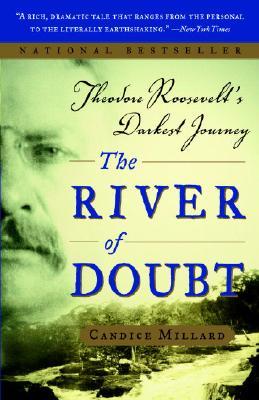
Case in point - a selection for this month, The River of Doubt, by Candice Millard, the "dazzling debut" non-fiction thriller that explores Theodore Roosevelt's dangerous and ill-conceived journey along an uncharted tributary of the Amazon. Historically, I don't read history (sorry!), and very little biography.  Indeed, I was prepared to endure this book in the name of being a loyal club member.  I was hooked from the first chapter.  The writing is excellent. The story so incredible that, at the time, many did not believe it to be true. The characters, a casting director's dream.

Top it all with background information about the period and the expedition that I would not have researched on my own, a lively discussion that raised questions I had not considered, and observations from a fellow member who has traveled the Amazon - well, I'd like to think Millard would be very pleased.  As I result, I plan to read her second book.

I'd love to hear what other book clubs are reading.  We're always looking for a good recommendation.