I have room of my own, a wonderful room. Though small in square footage, it has 14 ft. ceilings and a bay of windows that look out to distant foothills that turn copper at the break of dawn. There is a wall of book cases, home to the books that have helped shape my opinions and world view and many I have yet to read. Curios and collections gathered over decades could tell a tale or two. On the walls, artwork that reflects my aesthetic tastes and the most recent addition, my own graphite drawing, the first which I am satisfied (no, proud) enough to display. Tucked away in niches, whimsical creatures - gnomes and angels, fanciful women, and a balancing toy Santa who makes me smile so easily that he has earned a dedicated year-round home.
Scattered about are bowls of pens and colored pencils, baskets filled with notebooks, journals and magazines. Candles and candy jars, pillows and afghans. And being the holidays, rope lights, a tiny flocked tree, a bouquet of ornaments. In short, this is a room where I come to contemplate, create, and celebrate.
In one corner is my favorite chair, teal leather with an ottoman, where, nestled among pillows, an afghan across my lap, I retired this afternoon to nurse a bruised and inflamed knee, and for some inexplicable reason to reread A Room of One's Own, the book that initiated the creation of my own space some 30 years ago.
Virginia Woolf died the year I was born, she was only 59 years old. This little gem of only 118 pages, now a classic in many Women's Studies programs and lit courses, was first published in l929. The essay is based on lectures she gave at Cambridge on the subject of women and fiction, expanded for this book.
Not only can I not explain why I picked it up this afternoon, I can't recall why I originally bought it. I suspect the title aroused my curiosity. I certainly did not aspire to becoming a writer. I do recall being taken with her eloquent style, the beautiful descriptions, the clarity of her logic, the persuasiveness of her arguments. Setting out to consider why there were so few female authors of prose or poetry, faced with conflicting historical reasons (many asserting women lacked the character, imagination or ability), Woolf came to the conclusion that to create, particularly to write enduring literature, one must have a fixed income and a "room of one's own" - both historically the principal privilege of men.
At that first reading, I had the fixed income, but not a room of my own, not a dedicated space for reflection and creative pursuits, had never had one, never considered it, even during the years when I was single. Obviously, reading it again in this room has been a personal affirmation, a celebration. But it has also been affirming on a deeper level. For even as I read, I could look up and see several books on my shelves with the names of female authors. I could recall hours of pleasure and inspiration this past year thanks to Julia Cameron, P. D. James, Candace Millard, Marilyn Robinson, Donna Leon and Annie Dillard, to name a few. Couldn't help but wonder what Woolf would make of Hilary Mantel winning England's prestigious Book Award for 2012, the first person to win the award twice.
But lest this all makes A Room of One's Own seem irrelevant, one only has to take note that many women still do not have adequate fixed incomes, let alone rooms of their own. That a young girl could be brutally attacked for simply wanting to be educated. That there are those, even in this country, who would reverse the progress that women have made.
A Room of Own's One remains relevant, inspiring, and beautifully written.
On the quest - for the next good book, for the next inspiring character, for the riveting plot, the phrase that stirs the imagination, the thought that shakes up my world - and for those who share the quest.
Quotes
"While we are reading, we are all Don Quixote." ~ Mason Cooley
Showing posts with label history. Show all posts
Monday, December 3, 2012
Tuesday, September 11, 2012
The Destiny of the Republic
If it were not the September selection of our book club, I would have missed a wonderful book about an intriguing period in our history and a largely unforgotten and unappreciated man, the assassinated President James A. Garfield. Like many people, I suspect, I don't read much history.
Candice Millard didn't set out to write about Garfield. After her popular and highly acclaimed River of Doubt, the tale of Theodore Roosevelt's journey up the Amazon, she didn't want to write about another president. Her intention was to write about Alexander Graham Bell. In her research, and she does extensive research, she discovered that Bell had worked to the point of exhaustion and near despair on an invention that he hoped might save Garfield's life. And The Destiny of a Republic was born.
Bell's toil remains an interesting sub-plot, one of several, in Millard's narrative; for as the subtitle describes, this is "a Tale of Madness, Medicine, and the Murder of a President."
In the long run, Bell's effort could not overcome the havoc and destruction generated by the very physicians, led by one Dr. Doctor Bliss (no kidding!), with Garfield's recovery. Doctors who probed and poked the wounded president with dirty hands and dirty instruments, who kept him in the then rotting and rat infested White House, bringing on the massive internal infections that ultimately caused his death. That caused him to "rot" from within, unnecessarily as it turned out.
Although Joseph Lister's antiseptic techniques were accepted and successfully practiced in Europe, they were largely demeaned and dismissed by traditional and arrogant American physicians. The dangerously delusional, grandiose assassin, Charles Giteau, recognized the horrible culpability of Garfield's doctors, when at his trial he stated, "I shot the President; the doctors killed him." An indictment that an autopsy would confirm, although Bliss was never held accountable.
Millard's rich narrative style, built upon her skills as a researcher, analyst and editor, deliver history and its characters with a panache that would/should make any history professor green with envy. Garfield, Bliss, Giteau and a cast of several supporting characters are as well developed as any in a good novel. And what a movie this could make!
But, while I always appreciate strong character development, it is the larger historical, political, and medical context that Millard creates that I found most riveting and educational. I frequently heard myself saying, "I didn't know that." Then, "Why didn't I know that?" As I wandered through the multi-layered tableau of the beleaguered American post-Civil War landscape, the corrupt political environment, the barbaric medical practices, I also wandered through a surprising array of emotions. Anger and dismay, respect and incredulity, cynicism and hope, and ultimately tearful sorrow at the needless, excruciating death of what appeared to be a remarkable human being.
The remarkable man that emerges through his letters, and diaries, through the loyalties of other remarkable individuals - an educated, thoughtful, strong and compassionate man -would Garfield have made a remarkable president? Would he have been allowed to? I can hope the answer to both questions would/could be yes. I do know with certainty, however, that in The Destiny of the Republic Candice Millard has created this convert to historical narrative. And I will wait patiently for her next book. In the meantime, I'll go back and finish The River of Doubt.
Candice Millard didn't set out to write about Garfield. After her popular and highly acclaimed River of Doubt, the tale of Theodore Roosevelt's journey up the Amazon, she didn't want to write about another president. Her intention was to write about Alexander Graham Bell. In her research, and she does extensive research, she discovered that Bell had worked to the point of exhaustion and near despair on an invention that he hoped might save Garfield's life. And The Destiny of a Republic was born.
Bell's toil remains an interesting sub-plot, one of several, in Millard's narrative; for as the subtitle describes, this is "a Tale of Madness, Medicine, and the Murder of a President."
In the long run, Bell's effort could not overcome the havoc and destruction generated by the very physicians, led by one Dr. Doctor Bliss (no kidding!), with Garfield's recovery. Doctors who probed and poked the wounded president with dirty hands and dirty instruments, who kept him in the then rotting and rat infested White House, bringing on the massive internal infections that ultimately caused his death. That caused him to "rot" from within, unnecessarily as it turned out.
Although Joseph Lister's antiseptic techniques were accepted and successfully practiced in Europe, they were largely demeaned and dismissed by traditional and arrogant American physicians. The dangerously delusional, grandiose assassin, Charles Giteau, recognized the horrible culpability of Garfield's doctors, when at his trial he stated, "I shot the President; the doctors killed him." An indictment that an autopsy would confirm, although Bliss was never held accountable.
Millard's rich narrative style, built upon her skills as a researcher, analyst and editor, deliver history and its characters with a panache that would/should make any history professor green with envy. Garfield, Bliss, Giteau and a cast of several supporting characters are as well developed as any in a good novel. And what a movie this could make!
But, while I always appreciate strong character development, it is the larger historical, political, and medical context that Millard creates that I found most riveting and educational. I frequently heard myself saying, "I didn't know that." Then, "Why didn't I know that?" As I wandered through the multi-layered tableau of the beleaguered American post-Civil War landscape, the corrupt political environment, the barbaric medical practices, I also wandered through a surprising array of emotions. Anger and dismay, respect and incredulity, cynicism and hope, and ultimately tearful sorrow at the needless, excruciating death of what appeared to be a remarkable human being.
The remarkable man that emerges through his letters, and diaries, through the loyalties of other remarkable individuals - an educated, thoughtful, strong and compassionate man -would Garfield have made a remarkable president? Would he have been allowed to? I can hope the answer to both questions would/could be yes. I do know with certainty, however, that in The Destiny of the Republic Candice Millard has created this convert to historical narrative. And I will wait patiently for her next book. In the meantime, I'll go back and finish The River of Doubt.
Thursday, June 14, 2012
Let's Hear It for Book Clubs!
New to this little community a year ago, I was seeking a way to meet folks and I'd been told that a particular book club might be just what I was looking for and was invited to check it out. My only previous experience with a book club had been disappointing, so it was with some trepidation that I attended my first meeting.
Would I enjoy the selections? Would the other participants welcome a newcomer? Would they find my observations to add value? Would I find the conversations stimulating and satisfying? Fortunately, the answers - a resounding yes, yes, yes, and yes! So much so that when invited to participate in yet another club, I jumped at the chance.
This is the week when both groups meet, and I've come away, as usual, having enjoyed both selections and the pursuant discussions. I've also come to realize that the greatest value I've experienced is the introduction to authors and genres I would never have sought on my own.
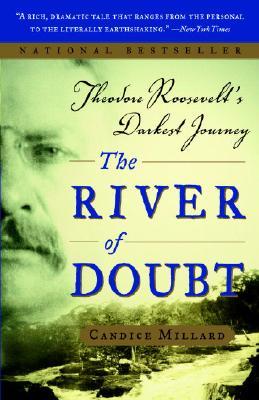
Case in point - a selection for this month, The River of Doubt, by Candice Millard, the "dazzling debut" non-fiction thriller that explores Theodore Roosevelt's dangerous and ill-conceived journey along an uncharted tributary of the Amazon. Historically, I don't read history (sorry!), and very little biography. Indeed, I was prepared to endure this book in the name of being a loyal club member. I was hooked from the first chapter. The writing is excellent. The story so incredible that, at the time, many did not believe it to be true. The characters, a casting director's dream.
Top it all with background information about the period and the expedition that I would not have researched on my own, a lively discussion that raised questions I had not considered, and observations from a fellow member who has traveled the Amazon - well, I'd like to think Millard would be very pleased. As I result, I plan to read her second book.
I'd love to hear what other book clubs are reading. We're always looking for a good recommendation.
Would I enjoy the selections? Would the other participants welcome a newcomer? Would they find my observations to add value? Would I find the conversations stimulating and satisfying? Fortunately, the answers - a resounding yes, yes, yes, and yes! So much so that when invited to participate in yet another club, I jumped at the chance.
This is the week when both groups meet, and I've come away, as usual, having enjoyed both selections and the pursuant discussions. I've also come to realize that the greatest value I've experienced is the introduction to authors and genres I would never have sought on my own.
Case in point - a selection for this month, The River of Doubt, by Candice Millard, the "dazzling debut" non-fiction thriller that explores Theodore Roosevelt's dangerous and ill-conceived journey along an uncharted tributary of the Amazon. Historically, I don't read history (sorry!), and very little biography. Indeed, I was prepared to endure this book in the name of being a loyal club member. I was hooked from the first chapter. The writing is excellent. The story so incredible that, at the time, many did not believe it to be true. The characters, a casting director's dream.
Top it all with background information about the period and the expedition that I would not have researched on my own, a lively discussion that raised questions I had not considered, and observations from a fellow member who has traveled the Amazon - well, I'd like to think Millard would be very pleased. As I result, I plan to read her second book.
I'd love to hear what other book clubs are reading. We're always looking for a good recommendation.
Subscribe to:
Posts (Atom)